Welded assemblies in series

From welding drawing to reproducible series production

A welded assembly that is well-made as a prototype or small series is not automatically suitable for structural off-take. As volumes increase, dimensions, welding sequence, and inspection must be identical for every delivery, while capacity for series welding is scarce in the region.

Roosen helps OEMs to produce steel welded assemblies in series using robotics, including the cutting and bending of sheet metal parts. This keeps quality, lead time, and capacity manageable as your off-take grows.

When it's right

Welded assemblies that are identical with every delivery

  • Robotic welding

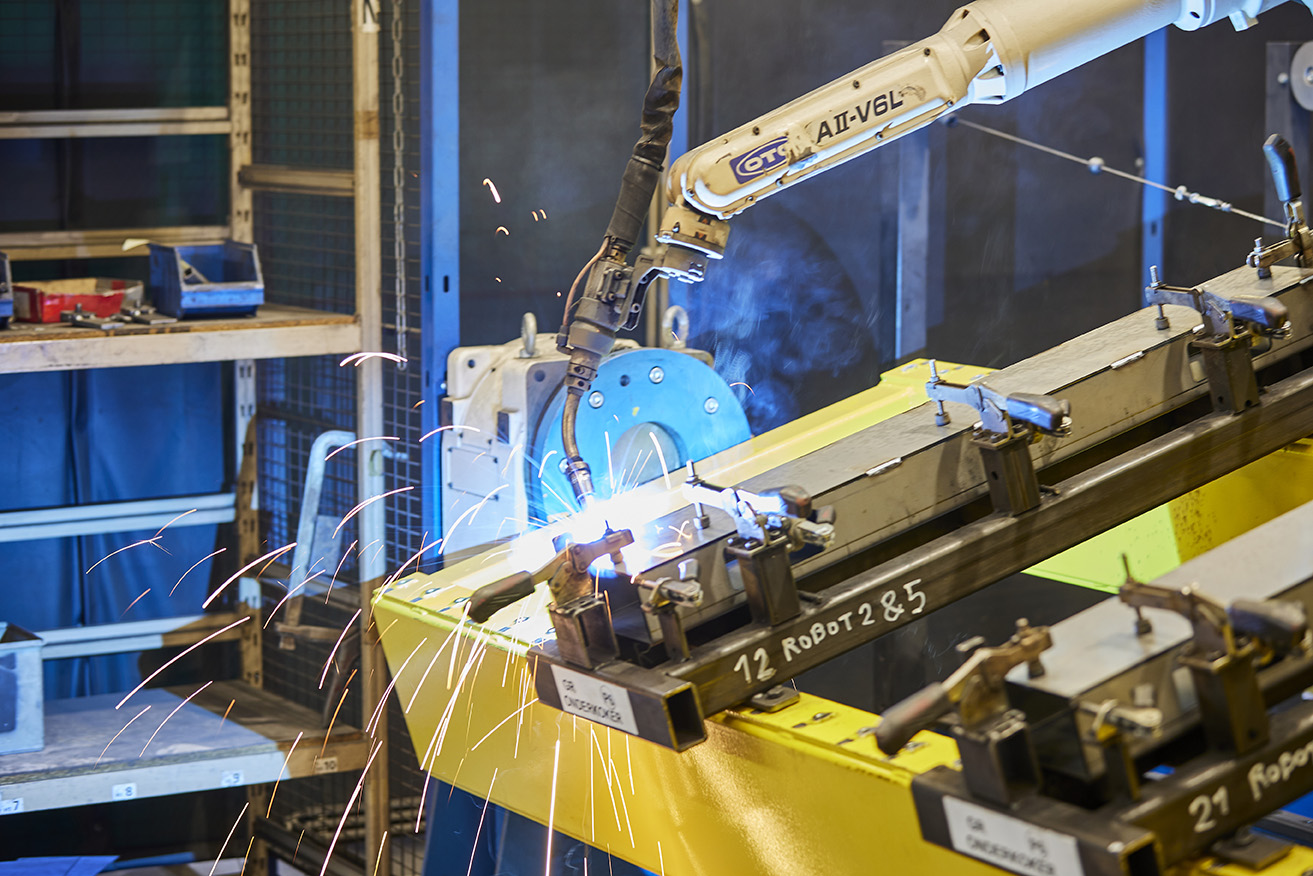
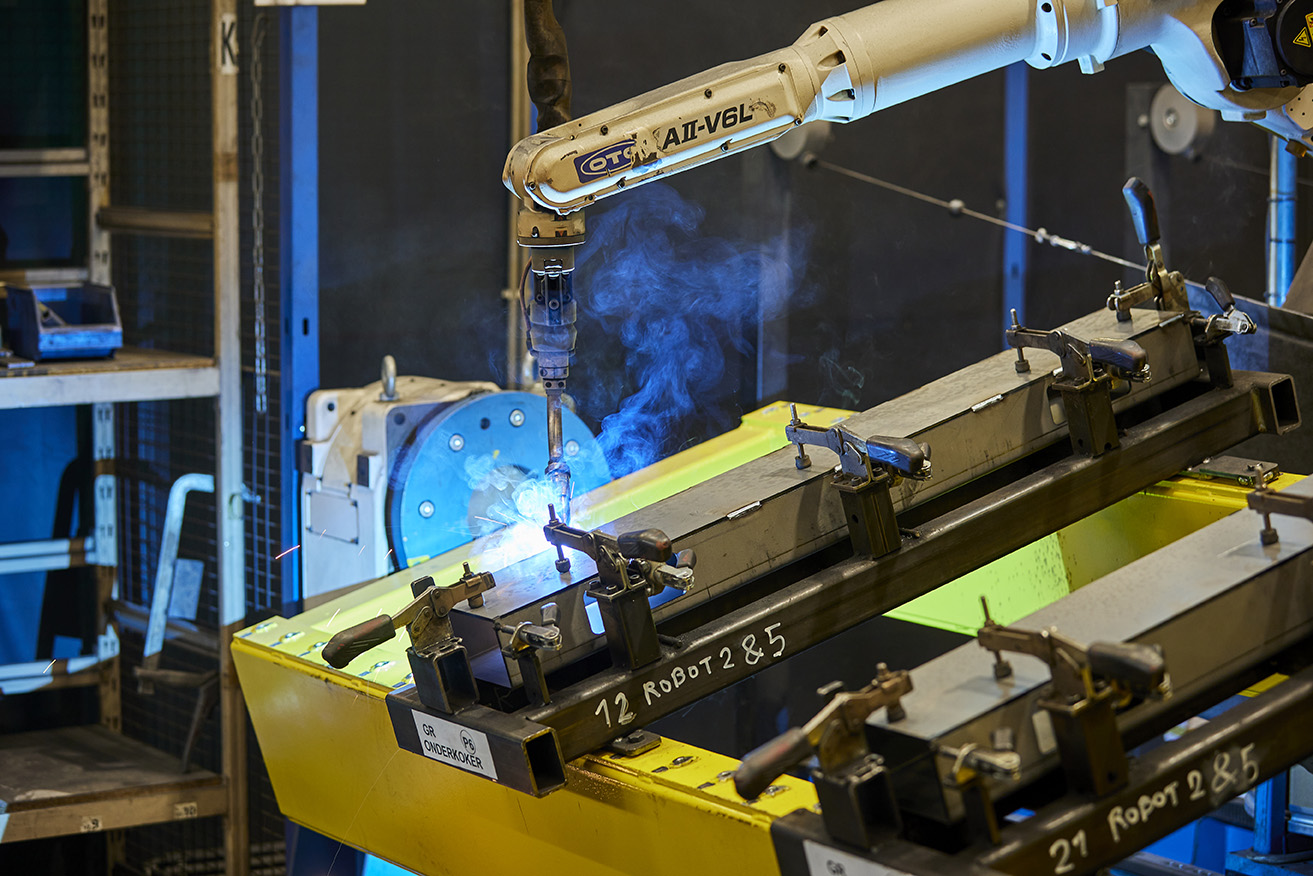
    A documented welding process for steel assemblies up to 5 meters and 500 kilograms.

  • Stainless steel and aluminum separated

    No contact with carbon steel during processing.

  • Inspection of the whole

    The complete assembly measured against the drawing.

  • Sheet metal in one route

    Cutting, bending, and welding without handovers between suppliers.

Where is your product now?

Not every welding request starts at the same moment

How Roosen helps

Roosen handles the assembly as an NPI. During the prototype or pre-series, we establish the welding program, fixturing, and welding sequence, and we check the dimensions of the complete assembly against the drawing. Series production starts after your sample approval.

How Roosen helps

Roosen assesses which assemblies are suitable for robotic welding and establishes the welding process in a pre-series. Production and planning are set up for repeating off-take, so that robot capacity is aligned with your expected volumes and the agreed delivery rhythm.

How Roosen helps

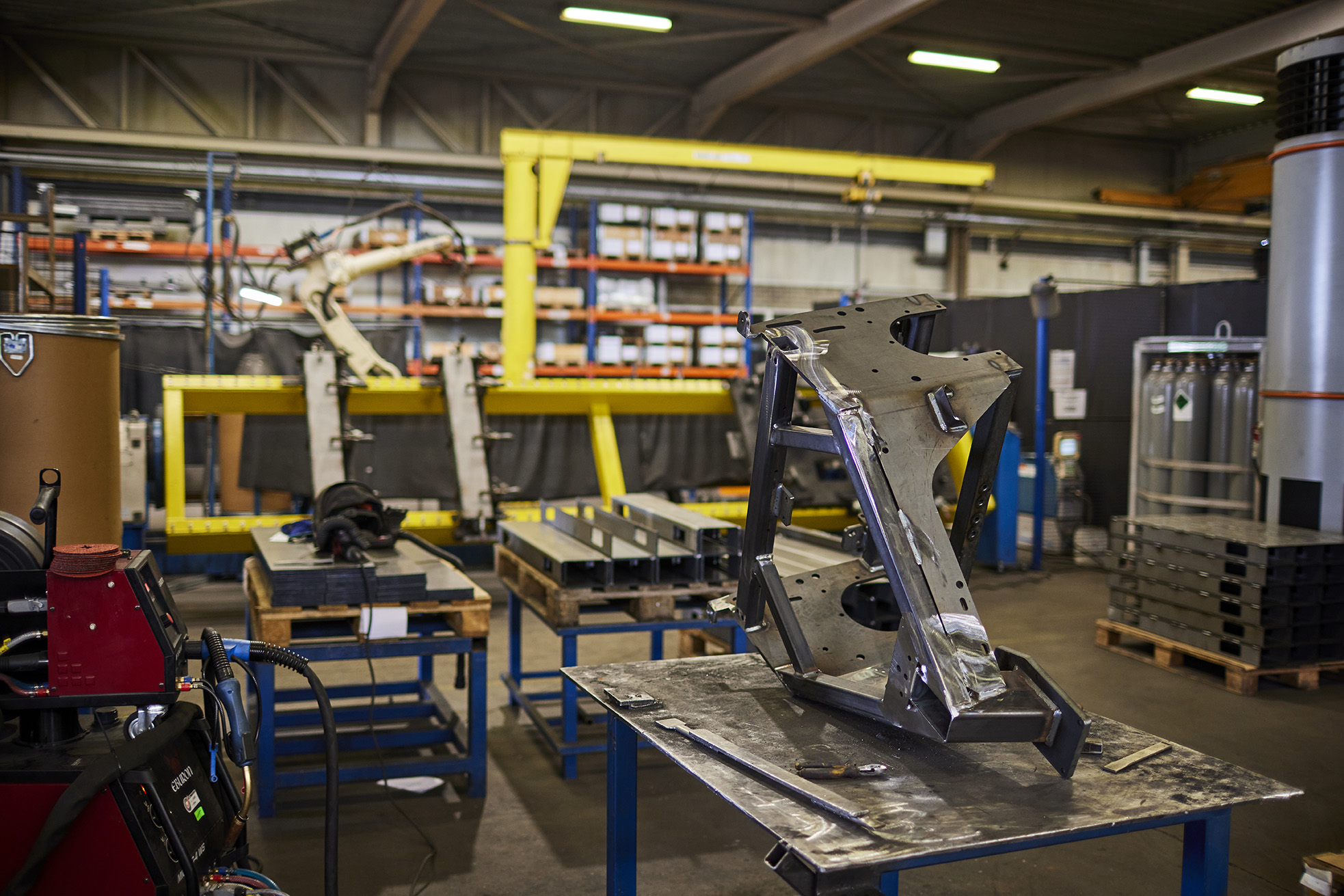
At Roosen, laser cutting, bending, and welding take place within the same company. The dimensions of the sheet metal parts are aligned with the subsequent welding process, and we organize any post-treatment via external partners. This gives you a single point of contact for the entire route.

How Roosen helps

Roosen establishes welding parameters, torch angle, speed, and sequence in the welding program, so that every assembly is welded in the same way. A 3D scan of the complete assembly shows where deviations occur, allowing the welding process to be adjusted in a targeted manner.

How Roosen helps

Roosen establishes welding parameters, torch angle, speed, and sequence in the welding program, so that every assembly is welded in the same way. A 3D scan of the complete assembly shows where deviations occur, allowing the welding process to be adjusted in a targeted manner.

How Roosen helps

Roosen establishes welding parameters, torch angle, speed, and sequence in the welding program, so that every assembly is welded in the same way. A 3D scan of the complete assembly shows where deviations occur, allowing the welding process to be adjusted in a targeted manner.

How Roosen helps

Roosen establishes welding parameters, torch angle, speed, and sequence in the welding program, so that every assembly is welded in the same way. A 3D scan of the complete assembly shows where deviations occur, allowing the welding process to be adjusted in a targeted manner.

How Roosen helps

Roosen establishes welding parameters, torch angle, speed, and sequence in the welding program, so that every assembly is welded in the same way. A 3D scan of the complete assembly shows where deviations occur, allowing the welding process to be adjusted in a targeted manner.

Your off-take is growing, but your welding shop is set up for smaller quantities

For single units and small series, a flexible, manual welding shop often works well. With structural off-take, the same setup becomes a limitation: capacity is difficult to expand and repeatability depends on who is at the welding table.

Roosen helps
We map out which assemblies are suitable for robotic welding, what dimensions the sheet metal parts must have for this, and how the welding process is established during a pre-series.

What this delivers
A welding production that can grow with your volumes, without every volume step requiring a different supplier or working method.

Repeatable instead of manual work

Series welding requires more than just welding capacity

Laying a weld bead is one thing. Ensuring that the five-hundredth assembly has the same dimensions as the first requires control over the fit of the sheet metal parts, the fixturing, the welding sequence, and the deformation caused by heat input. With manual welding, this control lies largely with the individual welder.

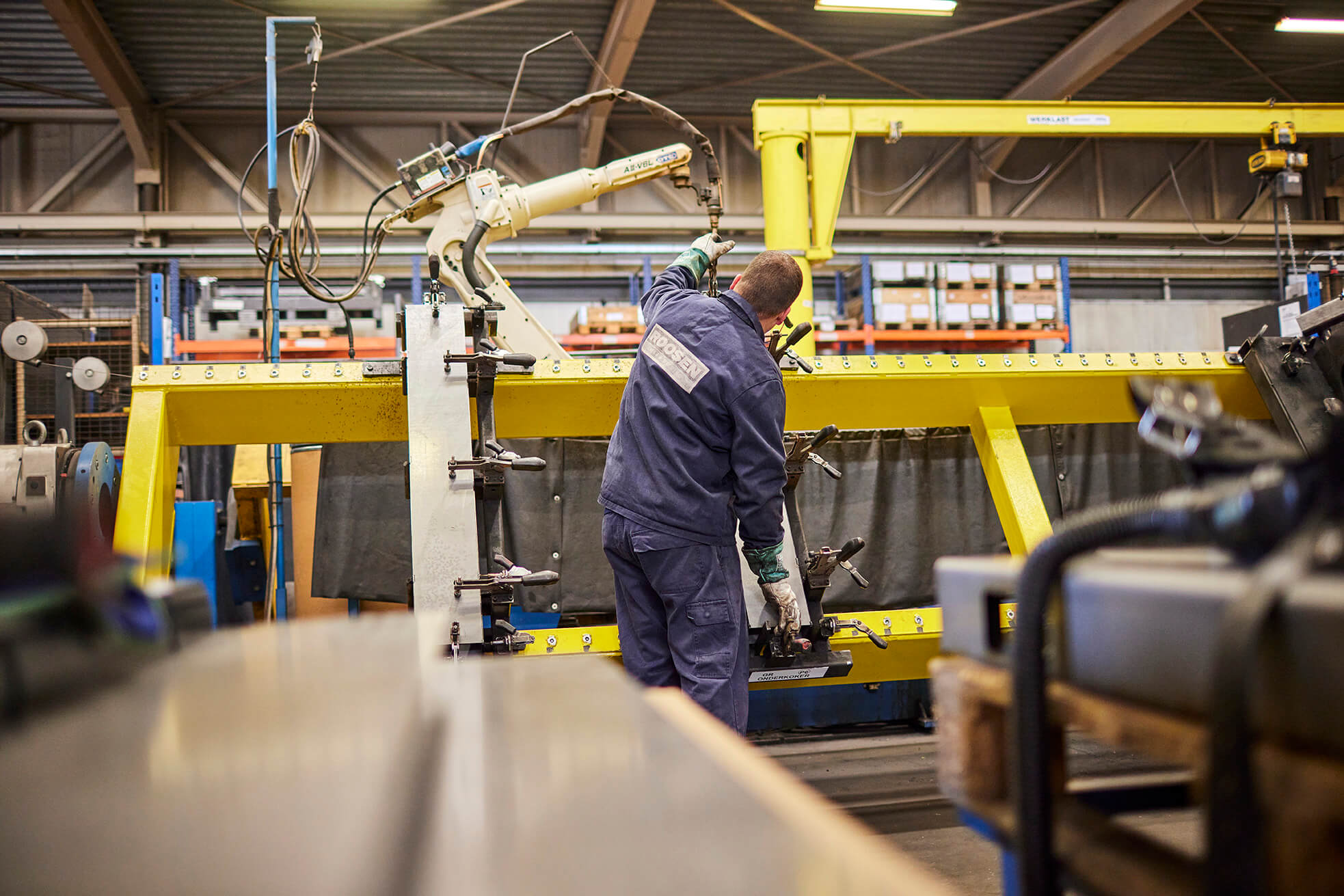
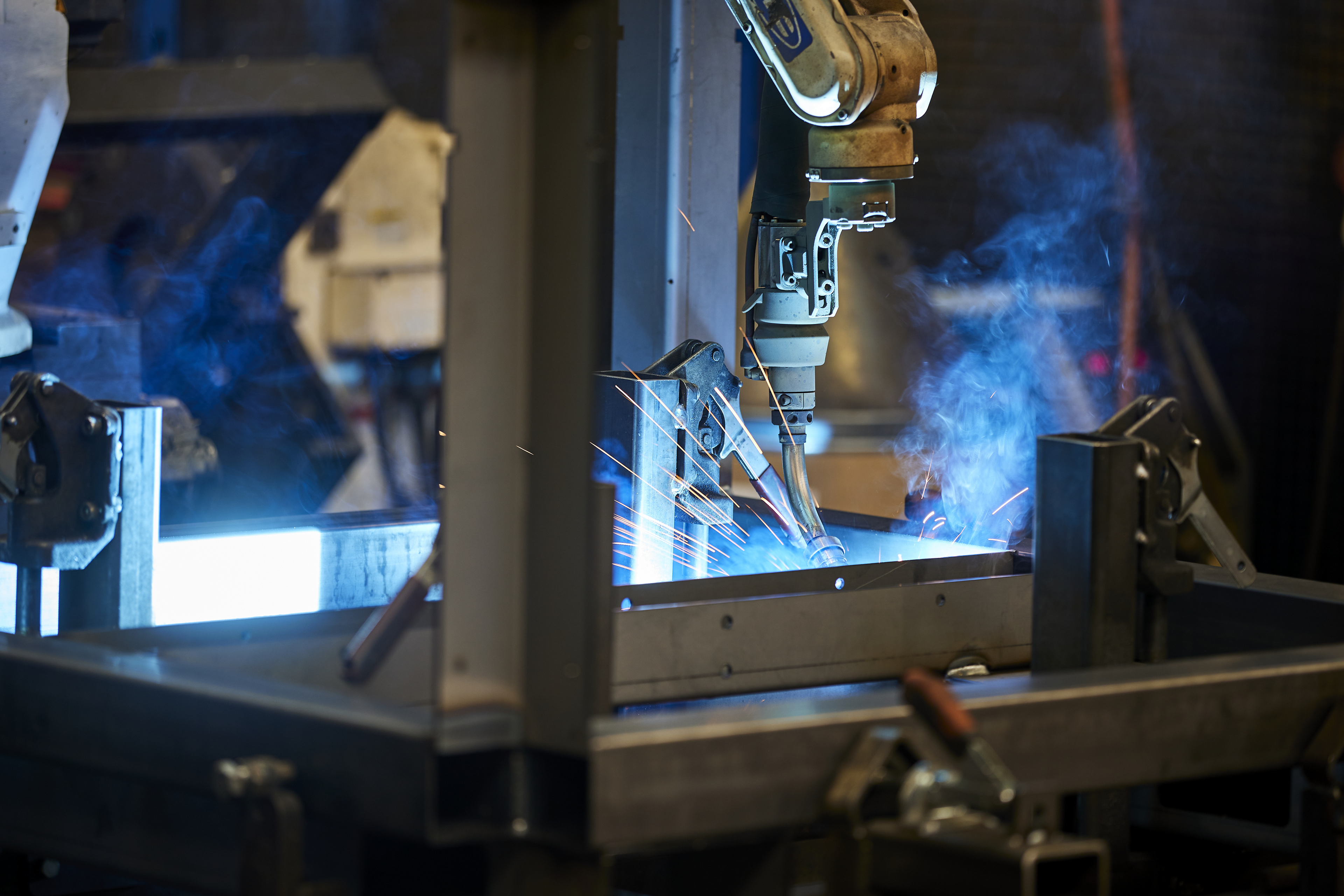
Roosen therefore sets up series work on the robot. Welding parameters, torch angle, speed, and sequence are established during the pre-series and then executed in the same way for every assembly. Approximately ninety percent of the welding is robotic, with manual welding as support for larger structures and actions that the robot cannot perform.

  • five welding robots in Belgium
  • one robot with an extra axis for weld beads around a corner
  • assemblies up to 5 meters and 500 kilograms
  • series from one hundred to ten thousand units per year
When materials must remain separated

Stainless steel that must remain corrosion-resistant

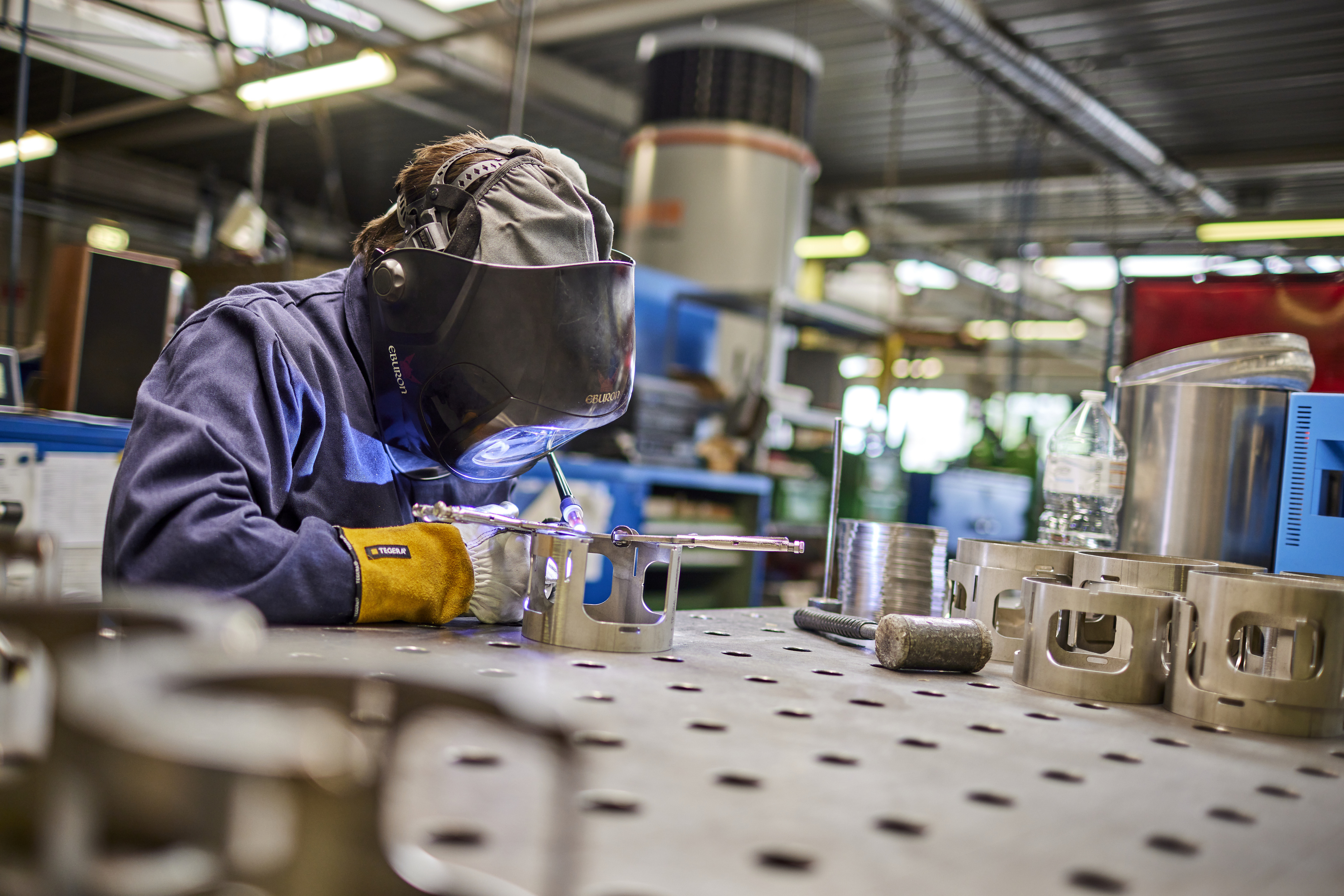
Stainless steel loses part of its corrosion resistance when it comes into contact with carbon steel particles, for example via tools, fixtures, or grinding dust. In applications where this is not permitted, a clean working method alone is not enough. The working environment must also be separated.

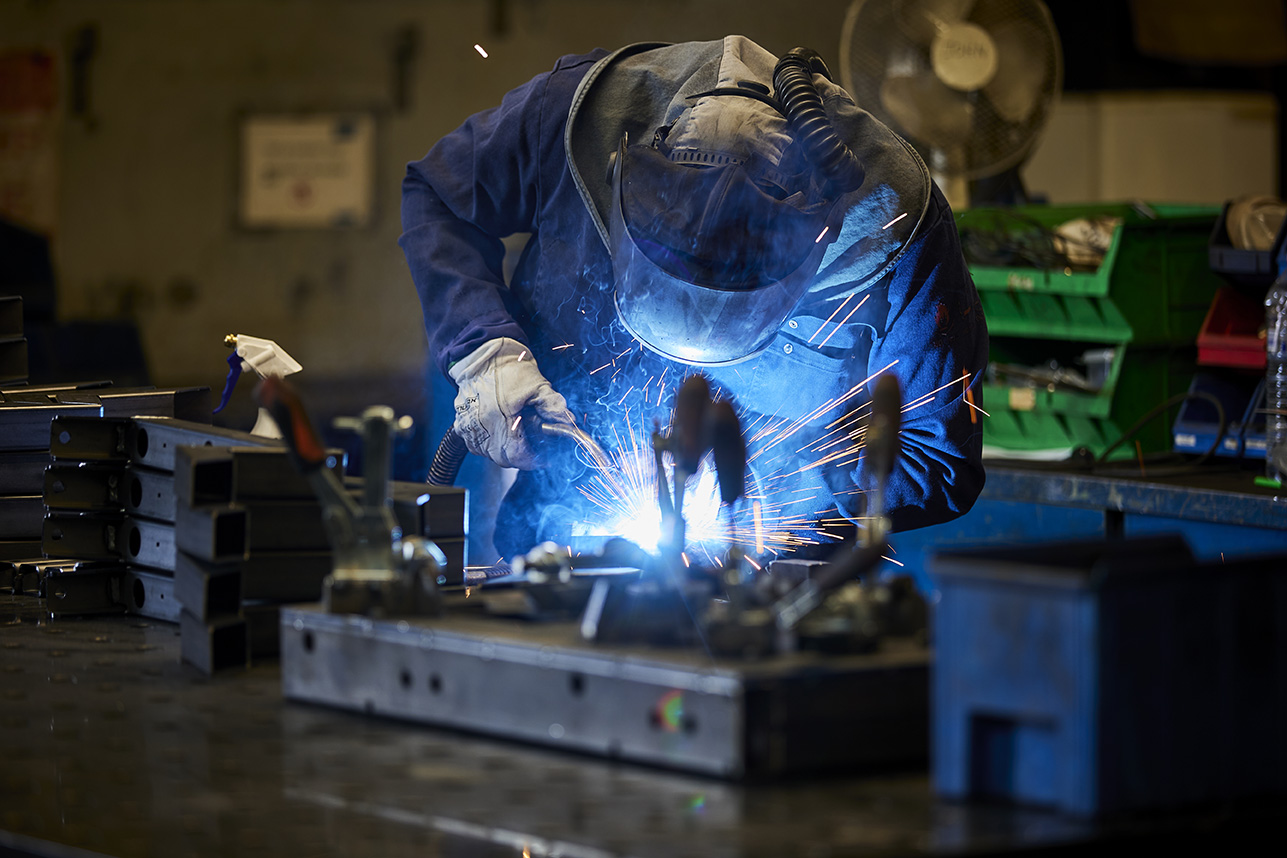
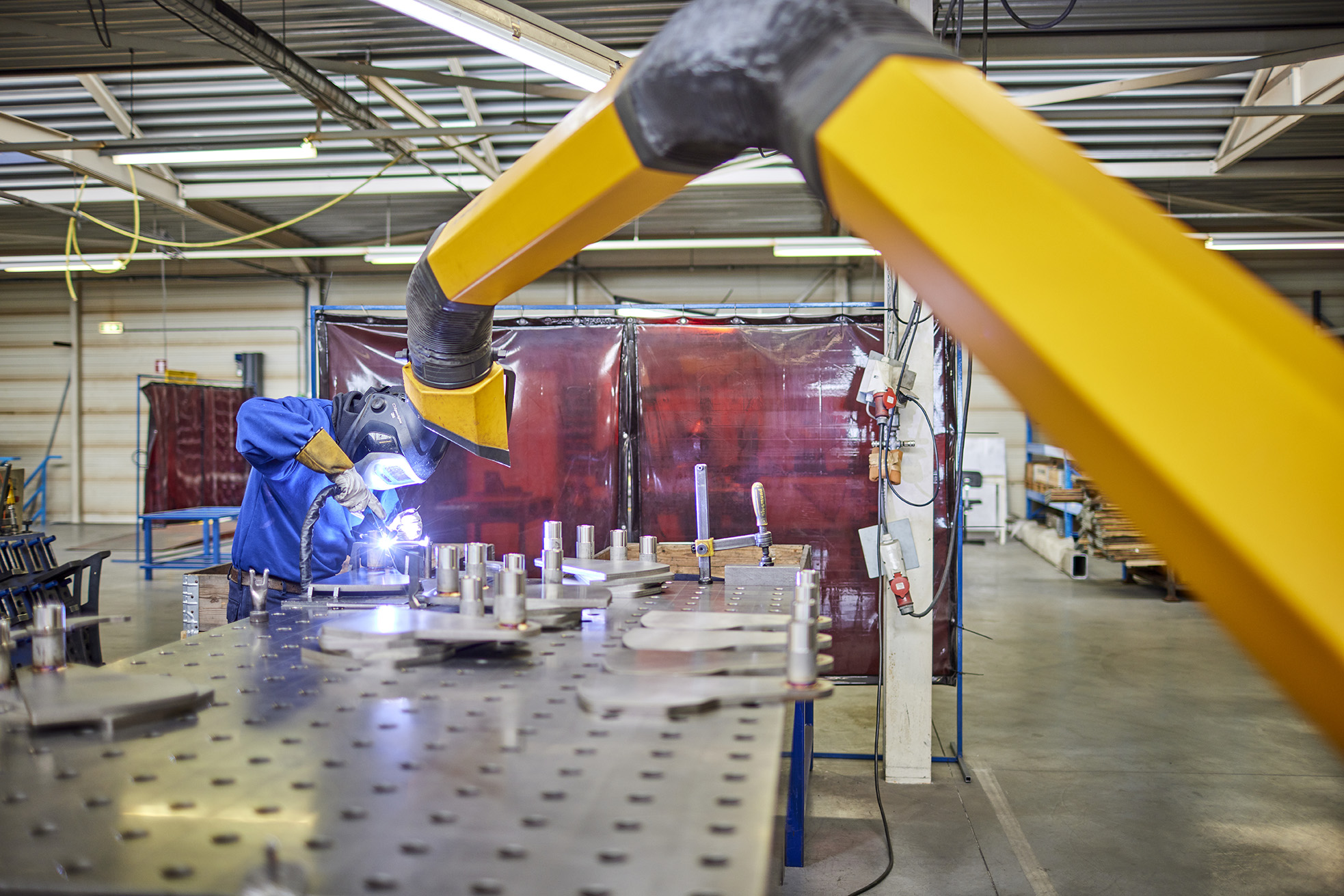
Roosen therefore processes stainless steel and aluminum in a separate welding department, detached from steel production. These materials are welded manually, within the same planning and quality agreements as the robotic work.

  • separate welding department for stainless steel and aluminum
  • no contact with carbon steel during processing
  • post-treatment via external partners, managed by Roosen

Measured against the drawing

Knowing that the entire assembly falls within tolerance

In welded assemblies, deviations rarely occur in a single dimension. Shrinkage and deformation affect the entire product, meaning that a check of a few critical dimensions does not always show whether the assembly as a whole fits into the next step of your production.

Roosen therefore scans the complete assembly with a 3D scanner and overlays the measurement on the drawing. This makes it visible whether the product falls within the agreed tolerances and where the welding process needs to be adjusted before deviations end up in the series.

  • scan of the complete assembly
  • comparison with drawing and tolerances
  • deviations visible before the series accelerates

From drawing to series

How we bring your welded assembly to series production

Check product information

We check whether drawings, materials, tolerances, welding specifications, and expected volumes are complete. Where necessary, our engineers contribute ideas on manufacturability.
Result: A complete basis for prototype and welding program.

Prototype or pre-series

Every new assembly is handled as an NPI. The welding program, fixturing, and welding sequence are set up and checked for dimensions.
Result: A documented welding process.

Sample approval

You evaluate the samples based on the agreed criteria. Series production starts after your release.
Result: Demonstrable compliance before the series begins.

Series production

Production proceeds according to the established process and the agreed delivery rhythm, for example, a fixed number of units per month.
Result: A continuous flow and predictable delivery.

Scaling up

When your off-take increases, robot capacity is set up for the expected volumes.
Result: More volume within the same validated welding process.

One route for your sheet metal

What does Roosen take on within your welding production?

Laser cutting

The sheet metal parts are cut in Belgium and immediately passed on to the welding department. You do not need to manage a separate cutting supplier.

Bending

Bending work is set up as part of the welded assembly. As a result, the dimensions of the bent parts align with the subsequent welding process.

Welding and dimensional inspection

Steel is welded using robotics, while stainless steel and aluminum are welded manually in a dedicated department. The complete assembly is checked against the drawing.

Post-treatment

If your assembly requires post-treatment, such as coating, Roosen organizes this via external partners. You maintain a single point of contact for the entire route.

Further processing

Welded assemblies can be further finished within Roosen Industries, treated under cleanroom conditions, or incorporated into a mechatronic module.

Planning and delivery

Deliveries proceed according to the agreed rhythm. Our sales team maintains regular contact regarding your expected off-take and any subsequent volume steps.

Will your welded assembly become part of a larger product?

Clear agreements from the start

Where does your responsibility end and Roosen's begin?

You provide, among other things

  • drawings and product specifications
  • material and tolerance requirements
  • expected volumes and delivery rhythm
  • decisions on product changes

Roosen can provide within the agreed scope

  • assessment of manufacturability
  • laser cutting and bending of sheet metal parts
  • setup of welding program and fixturing
  • robotic and manual welding
  • dimensional inspection of the complete assembly
  • coordination of post-treatment and delivery
The precise distribution varies per product. Therefore, a collaboration begins with establishing what is needed to produce your welded assembly reproducibly in series.

More control before volumes increase

A welding production set up for repetition

Capacity for series work

Production and planning are focused on repeating off-take, not on single units.

Quality established in the process

Execution is not dependent on individual working methods.

Fewer handovers in the chain

Cutting, bending, and welding align with each other within one company.

Single point of contact

From sheet metal part to assembled module, within a group with production in the Netherlands, Belgium, and India.

Certainty before you hand over your welding work

Frequently asked questions about welding

The determining factor is primarily whether the off-take is repeating and predictable. Series from one hundred to ten thousand units per year fit well with the setup of our welding production in Belgium. Single units and one-off orders fall outside the order profile.
For robotic welding, it involves assemblies up to approximately 5 meters and 500 kilograms. Larger structures are welded manually. Suitability is always assessed per product.

Robotic welding is focused on steel. Stainless steel and aluminum are welded manually in a separate department, so that stainless steel does not come into contact with carbon steel.

That depends on the completeness of the product information and the extent to which the assembly is suitable for robotic welding. A takeover follows the same route as a new product: checking the information, a pre-series, and sample approval.

That is the setup that Roosen prefers. Laser cutting and bending take place in the same company as the welding, so that the sheet metal parts align with the welding process and the lead time remains short.

Post-treatments such as coating are carried out via external partners. Roosen organizes the route and remains your point of contact.

In most cases, the customer provides the drawings. Our engineers assess the manufacturability and contribute ideas where the design can simplify the welding process or series production.

That depends on the scope we establish together. Within Roosen Industries, an assembly can be welded, finished, treated under cleanroom conditions, and assembled into a module.

Submit your welding challenge to us

Where could your welding production get stuck?

CTA

What challenges are you facing?

Prefer to discuss this directly? Call us at +31(0)497 517 171