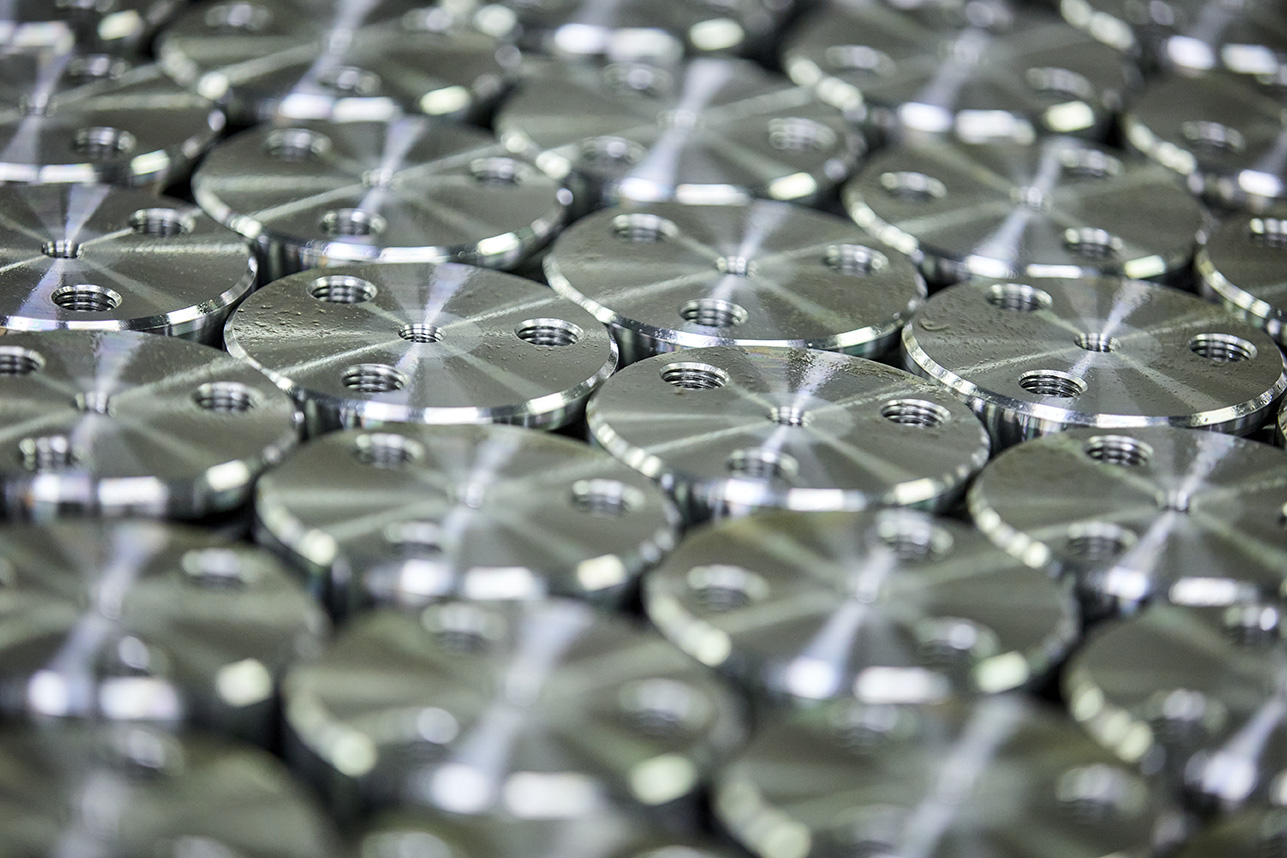
CNC milling for OEMs

Series milling with capacity that can grow with you

For milled parts in series, the challenge shifts as volumes increase. It is not the machining itself that becomes critical, but whether capacity, quality, and delivery remain manageable at every volume step. In a region where milling capacity is scarce and priority is given to the largest customers, this becomes a strategic choice.

Roosen mills repetitive series from 100 to 10,000 units per year in our own production facilities in Valkenswaard and India. We determine for each part which location suits the tolerance, complexity, and predictability, and we set up production and capacity so that they can grow in a controlled manner with your forecast.

When the series is right

Milling set up for continuity

  • Production Preparation

    From drawing package to a released, reproducible milling process.

  • Automated milling in the Netherlands

    For tight tolerances, specialized machining, and short lead times.

  • Series capacity in India

    For repetitive, predictable series in three shifts.

  • Location choice per part

    A production mix that aligns with requirements and demand.

Your starting situation

Not every milling challenge begins at the same moment

How Roosen helps

Roosen sets up production based on your forecast and distributes the parts across the locations that suit them. Repetitive, predictable parts can be scheduled in India, while parts with tighter tolerances or shorter lead times are produced in Valkenswaard. As a result, growth does not rely on a single location, and capacity can be expanded per part.

Roosen verifies drawings, specifications, and tolerances before production preparation starts, so that differences between the drawing package and the actual product become visible beforehand. The sample is made and released directly at the final production location. This establishes the reference for the series and ensures the transition proceeds based on controlled product information.
How Roosen helps

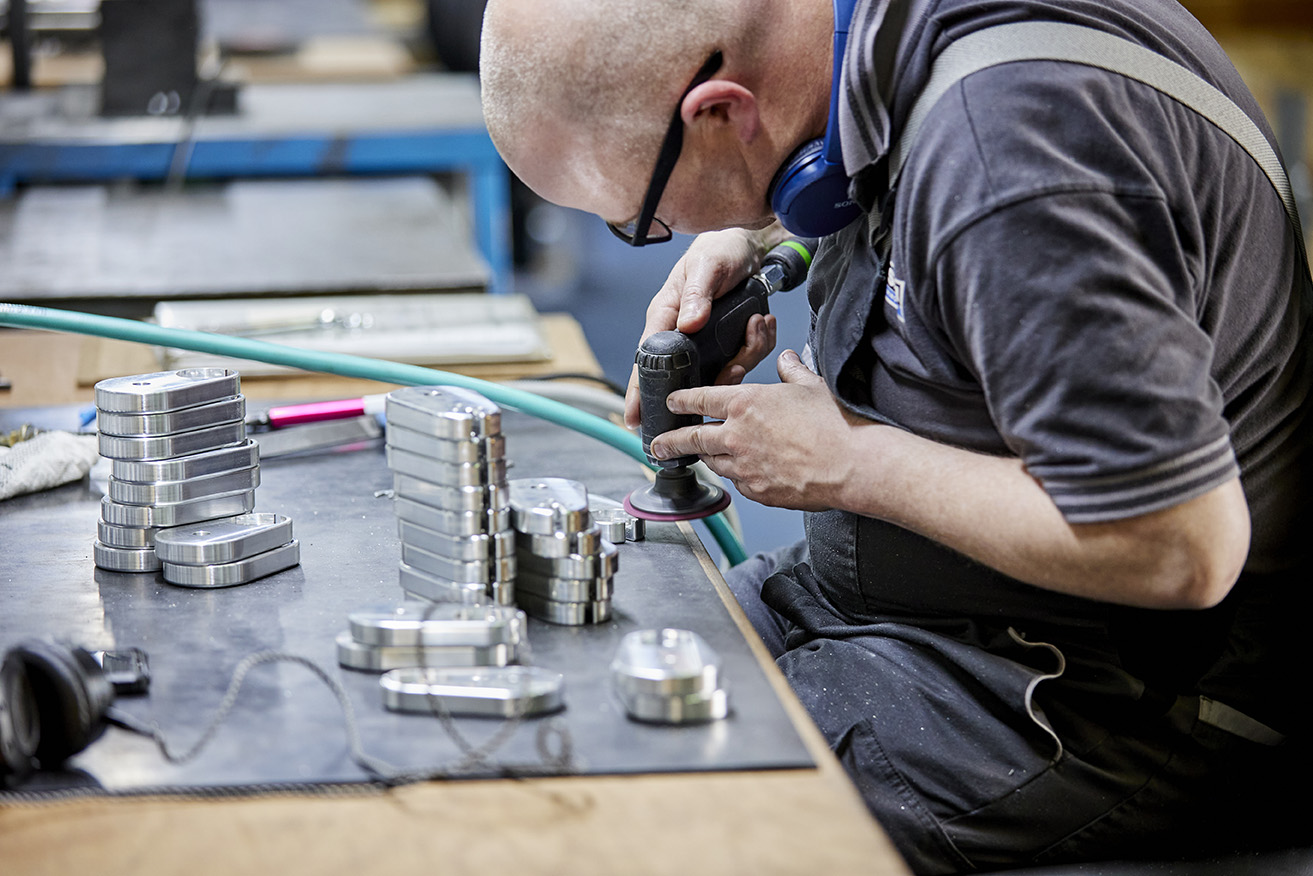
Roosen verifies drawings, specifications, and tolerances before production preparation starts, so that differences between the drawing package and the actual product become visible beforehand. The sample is made and released directly at the final production location. This establishes the reference for the series and ensures the transition proceeds based on controlled product information.
How Roosen helps

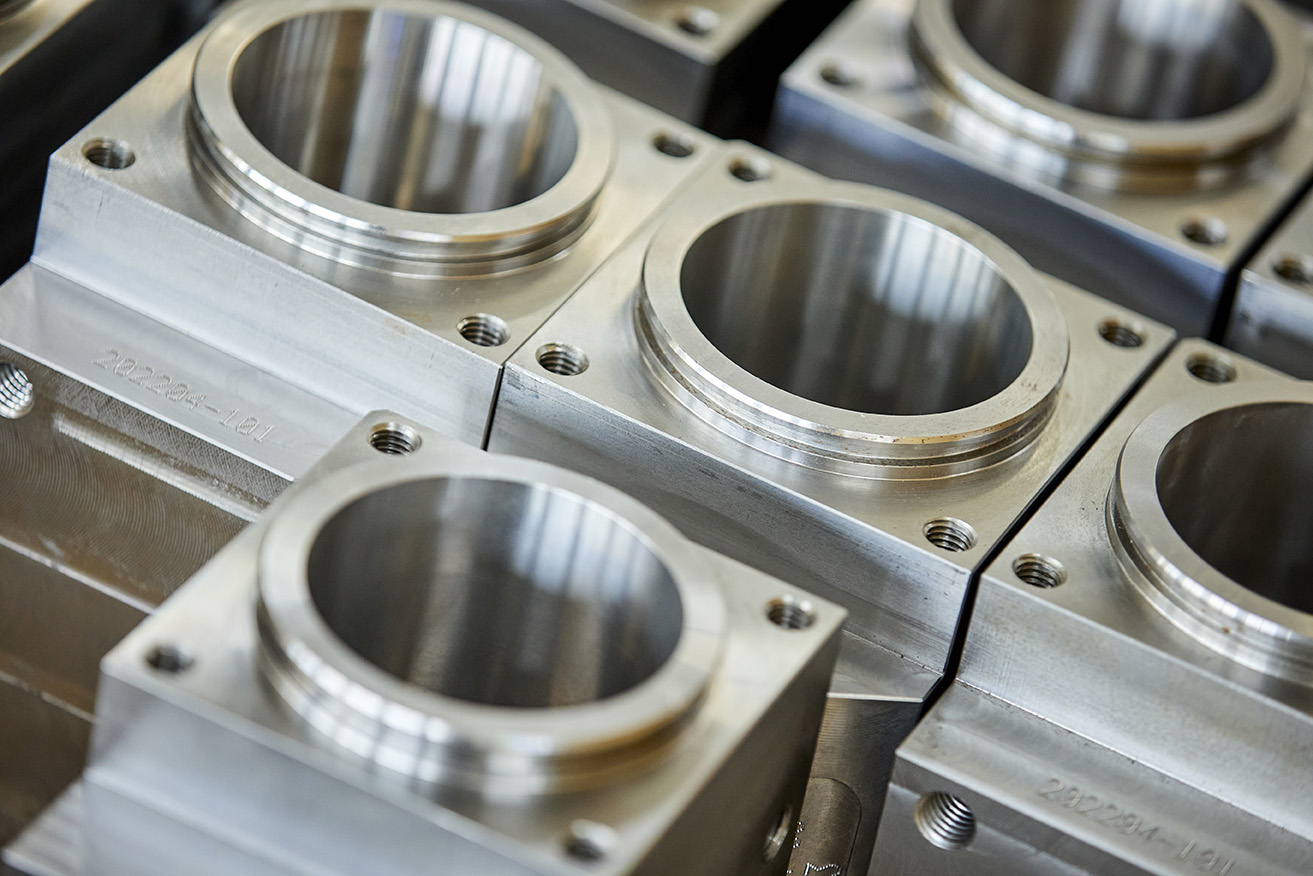
Together with your engineers, Roosen records the knowledge residing in your own production: critical characteristics, measurement agreements, and practical knowledge not found on the drawing. This knowledge is translated into a reproducible milling process at the location that suits the part. This frees up your own capacity, while the series is managed through a single point of contact.

How Roosen helps

Roosen assesses for each part whether the demand is repetitive and predictable in advance. Parts that meet these criteria can be produced in India, where predictable series have an attractive cost structure with the same quality requirements. There, too, the series only starts after a sample has been released at the new location, ensuring quality and delivery remain based on the same agreements.

Where scaling up begins

Capacity is a supply chain question, not a machine question

Extra milling capacity seems like a matter of available machine hours. In practice, whether a series can scale up stably depends on choices made earlier: whether the product information is complete and up to date, whether the milling process is recorded reproducibly, and whether the production location aligns with the nature of the demand. Problems that become visible during growth often originated earlier.


Roosen helps
We map out for each part which characteristics are critical, which location is suitable, and what capacity is needed for the volumes you expect. Because Roosen is not dependent on a single dominant sector, capacity can be dedicated to the customers with whom agreements have been made.

What this delivers
A milling process that can grow with your demand, without every volume step reintroducing uncertainty in quality or delivery.

Production Preparation

A stable series starts with accurate product information

Those who switch suppliers often discover that the drawing package no longer matches what is actually being produced. Adjustments have been made by the previous supplier over the years but were not always recorded. If this only becomes apparent during the series, production stagnates at the moment continuity is needed most.

Roosen therefore verifies drawings, specifications, and tolerances before production preparation starts. The sample or pre-series is made directly at the location where the series will also be produced, so that the release applies to the process that is actually deployed. This makes the approved sample the reference for every subsequent delivery.

  • verification of drawing package and specifications
  • alignment of critical characteristics and tolerances
  • sample or pre-series at the final production location
  • release by Roosen and, where desired, by you
  • measurement and test reports as agreed

Two locations, one production approach

The production location follows the requirements of the part

Roosen mills in its own production facilities in Valkenswaard and India, within one organization and under the same quality requirements. Valkenswaard is largely automated, with 3- to 5-axis machining centers, automatic loading, and pallet systems that enable unmanned continuous production. Here, parts are milled with tolerances tighter than 0.05 millimeters, more specialized machining, and series required on short notice.

Roosen India is the highest-performing unit within the group for quality and delivery reliability. The unit produces in three shifts, has its own quality organization, and holds the most certifications within the group. For repetitive, predictable series, India offers available capacity and an attractive cost structure, with the same quality requirements.

  • location choice per part, fixed in advance
  • one part produced entirely at one location
  • 3D measuring machines in a climate-controlled measuring room
  • management and final responsibility in the Netherlands

Over the duration of the series

Delivery reliability that is engineered, not forced

In series milling, the value lies not in a single delivery, but in continuity over years. An agreement for one hundred units per month must be met even under changing circumstances. This requires production where capacity, planning, and material availability are aligned with the demand pattern.

Roosen therefore sets up the series based on your call-offs and maintains regular contact during the term regarding progress and expected volumes. If demand rises, capacity is expanded in a timely manner. A part produced in the Netherlands that proves to be repetitive can eventually also be scheduled in India.

  • production aligned with fixed call-offs
  • periodic consultation on progress and volumes
  • capacity expansion in the Netherlands, India, or both
  • single point of contact, regardless of location or expertise

From request to series

One controlled route to stable series production

Verify product information

We check drawings, specifications, and tolerances for completeness and accuracy, and align the critical characteristics with you.
Result: A controlled and unambiguous drawing package.

Determine production location

For each part, we determine whether it will be produced in the Netherlands or India based on tolerance, complexity, and predictability.
Result: A fixed production mix per product.

Produce and release sample

The sample is made at the final location, tested by Roosen, and evaluated by you where desired.
Result: An approved reference for the series.

Start series production

The series starts according to the agreed quantities, delivery rhythms, packaging, and reporting.
Result: Deliveries according to the agreed call-off.

Scale capacity

Based on your forecast and periodic consultations, capacity is adjusted in a timely manner.
Result: A series that can scale up in a controlled manner.

Clear agreements

Who provides what and who is responsible for what

A strong collaboration starts with clear responsibilities. You remain the owner of the component, the design, and the specifications. Together, we determine which parts of industrialization, chain management, and execution Roosen will take over.

You provide

  • drawings and specifications of the part
  • functional requirements and critical characteristics
  • expected volumes and demand patterns
  • any requirements for reporting and packaging
  • your own release criteria, where applicable

Roosen handles

  • verification of product information
  • choice and setup of the production location
  • material procurement and production planning
  • sample, release, and series production
  • quality control and measurement reporting
  • capacity planning over the duration of the series
The exact scope is recorded per part. Where milled parts are part of an assembly, Roosen can also provide turning, cleanroom assembly, or the complete mechatronic assembly.

Clarity first on requirements, process, and results

The determining factor is the repetitive nature of the demand, not the size of a single order. Roosen’s milling work is set up for recurring series of 100 to 10,000 units per year, ensuring a continuous flow in production. Single pieces and one-off orders are less suited to this setup.

The tolerance partly determines the production location. In India, parts are milled with tolerances up to 0.05 millimeters; parts with tighter tolerances are produced in Valkenswaard.

The criterion is predictability, not series size. India comes into play as soon as a part is demonstrably repetitive and can be scheduled in advance. The lead time to the first delivery is approximately 120 days for container transport, after which deliveries can be made in a fixed monthly rhythm. A small series that recurs annually therefore also fits well.

In principle, no. The production location is determined per part in advance, and the sample is made directly at that location. Exceptions are negotiable.

Steel, stainless steel, aluminum, and brass are the most common, along with various plastics, machined from bar stock or raw castings. Special materials fall outside the standard offering and are assessed per request.

Every series starts with a released sample as a reference. Both locations work with 3D measuring machines in climate-controlled measuring rooms, and measurement and test reports are provided as agreed. Roosen India is certified according to ISO 9001, 14001, and 45001; the Dutch locations according to ISO 14001 and 45001.

As long as the part fits within the series profile, standalone milling work is certainly possible. Parts that also require turning can be machined on the turn-mill combinations at both locations.

The order profile is more decisive than the sector. Roosen mills for the medical sector, nuclear industry, agriculture, transport and logistics, machine building, and the food industry, among others.

Submit your milling challenge to us

Which parts need stable series milling?

CTA

What challenges are you facing?

Prefer to discuss your requirements directly? Call us at +31(0)497 517 171.